
What is hydrotherapy?
Veterinary Health Centre, Old Forge Court 17a Moor Street, Chepstow NP16 5DB
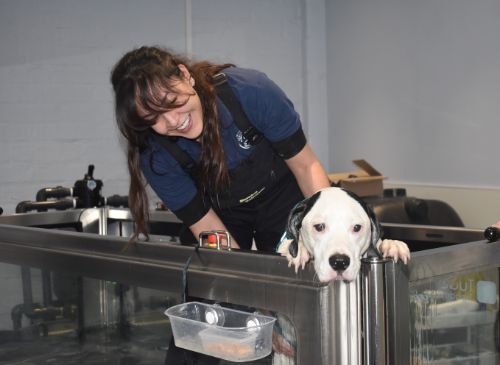
Hydrotherapy is a form of physiotherapy carried out in water. It strengthens muscles, joints, ligaments and tendons without feeling any of the shocks they would feel on land. The resistance of the water makes the muscles work harder and therefore become stronger.
We use an underwater treadmill – so your dog (or cat!) will be walking through water rather than swimming.
Would my pet benefit from hydrotherapy?
rehabilitation after spinal or orthopaedic surgery, but is also useful for joint conditions such as hip and elbow dysplasia. We also recommend hydrotherapy for old and stiff dogs, and as an aid to weight loss when diet and land- based exercise are failing to show results.
What will happen in the sessions?
The initial one hour consultation will assess the pets mobility and strength, and set goals for treatment. The first step is getting your pet used to the water – we take our time in order to keep them as calm as possible. Most dogs soon get the hang
of it, and love coming to their sessions!
Our Hydrotherapists, Joanna and Clare are happy to talk with you, if you would like to find out more – contact us here.
VETERINARY CARE ASSISTANT- CHEPSTOW

Our Books Are Open!

We are currently finalising a new pricing structure, with the exact rates still to be decided but want to give you as much notice as possible so you can plan accordingly. We hope you will appreciate that the changes are necessary due to ongoing increases in our operational costs and we will continue to keep prices as fair as possible. We plan to implement the new prices part way through January 2026 and will update you with the exact details soon. Thank you for your continued support!

1 Months Notice Required for Animal Health Certificates!

Sunday Emergencies - From January 2025 *Update: After March 30th we will revert back to using Vetsnow for our out of hours cover on Sundays. Please call our Chepstow number 01291 625205 & you will be automatically redirected.

In summary: • Brucella canis is a bacterium that can infect dogs and humans. • It generally causes reproductive failure in dogs and mild symptoms such as non-specific aches and pains in humans. • The risk of transmission between dogs and humans is low. People most at risk are immuno-compromised, dog breeders, those who import dogs, vets and vet nurses. • Because we have members of staff who are either immuno-compromised staff and of childbearing age, our practice policy is that imported dogs from Europe are tested for the disease prior to neutering and other surgical procedures, especially those originating from high risk countries in Eastern Europe • We use a UK government approved laboratory for testing involving two different blood tests. • It is a difficult disease to diagnose because infected animals may not show any signs of illness and may transmit the disease up to several years after infection. • Successful elimination of the disease from an infected animal cannot be confirmed because the bacterium can hide inside other cells making it impossible for antibiotics and a patient’s own immune system to destroy it. • The only way to eliminate the bacterium is by euthanasia of an infected animal. What symptoms does the disease cause and how is it transmitted ? Brucella canis is a type of bacteria which can cause reproductive failure including abortion and early deaths in puppies belonging to infected dogs. Less commonly, it can cause lameness, weakness and spinal problems. Humans can contract the disease mainly via contact with fluids from infected animals, especially those relating to birth. It can also be transmitted via urine, blood, faeces, saliva and nasal discharge. Symptoms in humans include mild fever, headaches, myalgia, weight loss and, more rarely, inflammation in heart, joint and brain tissue. The risk of humans becoming infected is considered to be low to very low. How many cases are there in the UK? Prior to 2020, there were only 2 confirmed cases in dogs in the UK; both dogs had been imported from Europe. By September 2023 this number had risen to 160 with the majority of infected animals originating in Romania which is most likely a reflection of many rescue dogs being sourced from the country. There have been 2 confirmed human cases: one of these was the owner of an imported pregnant dog which gave birth shortly after arrival in the UK. Which countries in Europe are most likely to have infected dogs? Dogs in Eastern European countries are most at risk of contracting the disease, including Romania, Belarus, Ukraine, Russia, Poland, Hungary, Bosnia, Greece, Turkey, Latvia, Slovakia, Slovenia, Cyprus, Montenegro, Serbia, Croatia and Malta. Do all infected animals show symptoms? Brucella canis can be difficult to diagnose because infected animals may not show any clinical symptoms and the incubation period can be between 2 and 12 weeks. This means that an infected animal may go undetected if it is tested while still incubating the disease. The only way to confirm infection is by bacterial culture of infected tissue, e.g. aborted tissue, although suspicion of infection is high with certain blood tests When should testing be carried out? There are currently no legal requirements regarding pre-import testing of dogs from Europe. However, in line with various veterinary and governmental organisations, we recommend that all dogs imported from Europe to the UK are tested for Brucella canis prior to import. This should be timed to allow for maximum incubation time (3 months) and carried out via testing at specified reference labs rather than the commonly used SNAP (similar to lateral flow) tests. It is also recommended that pregnant dogs and puppies are not imported, especially from high risk countries. Which people are most at risk of becoming infected? People most at risk of becoming infected are immunocompromised, young and old , as well as those in contact with infected tissues e.g. breeders, importers, vets and veterinary nurses. At the present time many specialist veterinary practices or hospitals who have dogs referred to them insist the animals are tested for Brucella canis prior to the first appointment. There are many gaps in our knowledge about the disease including prevalence rates in many countries, the significance of disease transmission via fluids, such as blood and urine, and human infections which generally involve mild symptoms . If a positive case is identified what do we recommend? If a dog tests positive for the disease but has no clinical sym ptoms, is not pregnant and there is no history of exposure to an infected animal, it should ideally be isolated from other dogs and retested 4-6 weeks later. Meanwhile, owners should exercise strict hygiene when handling any canine bodily fluids. Regarding treatment, unfortunately, Brucella canis can hide from disease fighting cells making it impossible to confirm whether a treated animal is negative or not. If treatment of a positive animal is chosen, two antibiotics are usually given for several weeks. Neutering reduces the risk of transmission (especially to humans) as does prevention of close physical contact between infected and uninfected animals. This means that infected animals, even after neutering and treatment with antibiotics, should ideally be isolated from other dogs because they could begin shedding the disease at any time. Consideration for the potential effects of isolation on an animal’s welfare should be borne in mind. The only definitive way t o eliminate the disease is by e uthanasia of an infected animal.

Many thanks to the Welsh Government Economy team, for making the following video:

So What's New?

Our Health Plan Prices are Going Up!
In the past few years, local dog owners have become increasingly aware of the deadly disease - CRGV (or Alabama Rot) which has made an appearance in our area. There have been a total of 11 cases in a 20 mile radius around Chepstow - so whilst the risks are in fact very low; there is a high level of public concern about their beloved pets. Alabama Rot does show a seasonal pattern with most cases occurring between November and May. So far the research has not found the cause but studies suggest muddy woodlands may present a risk. CRGV causes inflammation and blood clots in the vessels of the skin and kidneys. This leads to swollen ulcers on the legs, belly and face and can progress within a few days to kidney failure.